




JOIN NOW
our Italian Cooking
Newsletter
our Italian Cooking
Newsletter













Publication or use of pictures, recipes, articles, or any other material form my Web site, on or off-line without written permission from the author is prohibited. If you would like to use my articles on your Web site or in your publication, contact me for details. Avoid infringing copyright law and its consequences: read the article 7 Online Copyright Myths by Judith Kallos
Read our
DISCLAIMER and
PRIVACY POLICY
before using
our site
-------------------
Linking Policy
Advertise with us
DISCLAIMER and
PRIVACY POLICY
before using
our site
-
Advertise with us
Copyright © 2003 - 2011 Anna Maria Volpi - All Rights reserved.
Anna Maria's Open Kitchen Site Map

site map
recipes
policies
about us


Some More Hot Topics You'd Like to See adv.


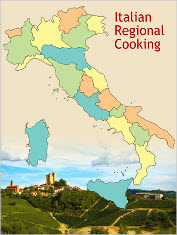
Italy is a long peninsula separated from the rest of the continent by the highest chain of mountains in Europe. In addition, a long spine of mountains runs from north to south through this narrow country. These geographic features create a myriad of environments with noticeable variations, including fertile valleys, mountains covered with forests, cool foothills, naked rocks, Mediterranean coastlines, and arid plains. A great variety of different climates have also created innumerable unique geographical areas.
Italian Regional Cooking


CALABRIA
TRENTINO
ALTO ADIGE
ALTO ADIGE
FRIULI
VENEZIA GIULIA
VENEZIA GIULIA


MARCHE
ABRUZZO
MOLISE
PUGLIA
BASILICATA


Italian Regional Cooking
UMBRIA

SARDEGNA

VAL D’AOSTA

PIEMONTE
LIGURIA
EMILIA-ROMAGNA

Bologna
Turin
Cagliari
Palermo
Bari


Anna Maria’s Italian Menus
Anna Maria’s Open Kitchen
Step by step illustrated Italian recipes for Tiramisu’, pasta, lasagna, gnocchi, risotto, pizza, and much more, including articles and a food newsletter.
Step by step illustrated Italian recipes for Tiramisu’, pasta, lasagna, gnocchi, risotto, pizza, and much more, including articles and a food newsletter.

The Italian Menu
The Italian menus throughout the country are usually composed of more than one course: a first course (primo piatto) of starchy food like pasta, lasagna, gnocchi, risotto, polenta, or a thick soup with bread or pasta; a second course (secondo piatto) of meat or fish; and a side dish (contorno) of salad or cooked vegetables.
Antipasto (appetizer), dolci (sweets), and liquor are only present for more formal Italian menu or menus.
Bread is always present at the table, and the Italian menu always includes fresh fruit as the most common dessert. Wine is generally served at dinner. Espresso coffee is served at the end of the meal.
Bread is always present at the table, and the Italian menu always includes fresh fruit as the most common dessert. Wine is generally served at dinner. Espresso coffee is served at the end of the meal.
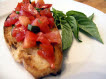
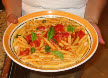
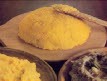


Italy is a very diverse country and it is difficult if not impossible to define an Italian cooking style, but we can correlate consistency in spite of variety in the Italians’ approach toward food.
All Italians eat with gusto. Everywhere their pantries are filled with the same basic products: cheese, sausage, ham, bread, and wine. Vegetables are of high quality and Italians value full natural flavor — everybody is willing to walk the extra distance to buy better and fresher products.
Sauces are the essence and the soul of Italian cooking dishes; usually they are inseparable from the process of dish making. The spices added to the preparations mean to enhance the taste of the dishes and not to cover it. Contrary to common belief Italian don’t use excessive amounts of garlic, or other herbs to their food.
Italian cooking has evolved for centuries and continues to evolve today. It is informal, lacks rigid rules, and is adaptive and versatile. It was not invented by professional chefs, but by millions of everyday cooks who improvise Italian cooking daily in their kitchens.


ITALIAN MENUS
by
REGIONAL STYLE
by
REGIONAL STYLE


