












JOIN NOW
our Italian Cooking
Newsletter
our Italian Cooking
Newsletter

Publication or use of pictures, recipes, articles, or any other material form my Web site, on or off-line without written permission from the author is prohibited. If you would like to use my articles on your Web site or in your publication, contact me for details. Avoid infringing copyright law and its consequences: read the article 7 Online Copyright Myths by Judith Kallos
Read our
DISCLAIMER and
PRIVACY POLICY
before using
our site
-------------------
Linking Policy
Advertise with us
DISCLAIMER and
PRIVACY POLICY
before using
our site
-
Advertise with us
Copyright © 2003 - 2011 Anna Maria Volpi - All Rights reserved.
Anna Maria's Open Kitchen Site Map

site map
recipes
policies
about us


Some More Hot Topics You'd Like to See adv.




Anna Maria Suggests
Extra-
The Best Selection of Italian Extra-
Buy from the source Authentic Aged Traditional Balsamic Vinegar from Italy
Sicily, Apulia, Lazio, Liguria, and More...The Best Selection of Succulent Italian Olives Oil
Infused Extra-
Spice up your dishes with Infused Flavored Italian Extra-
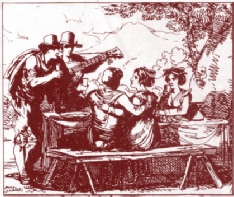
Street musicians at the Osteria. Engraving by B. Pinelli, circa 1830. It is still very popular in Rome to go to the Castelli (the Castles), which is the term used for the small towns in the countryside over the hills south of Rome. In the local trattorie, often al fresco (in the open air) under a vine pergola, it is possible to enjoy the simple food and wine of the Roman countryside.
Pasta Roman Style
Dry pasta has been around since the Middle Ages. At the end of the nineteenth century, mechanization and industrialization made it affordable, largely available, and macaroni became a popular food.
Before the arrival of the tomato, macaroni was dressed simply and almost exclusively with cheese — either parmigiano in the north or “pecorino” sheep cheese in the south. Fried pork fat, maybe “reinforced” by garlic, onion, or herbs would give pasta condiments more flavor. It was an inexpensive and simple food for a country that had been frugal for many centuries.
In Italian cuisine, we still find that love for simplicity, and most Italians prefer dishes minimally processed. Good Italian dishes are always simple. If you have a recipe that requires a staff of professional chefs or calls for dry herbs and lots of spices, be wary: in most cases it is not genuinely Italian.
So, what is the secret to all those tasty Italian dishes? Use the best ingredients like good aged imported cheese, excellent extra-virgin olive oil, vinegars, pasta, and rice. Buy the freshest vegetables in season, possibly at the farmers market, and use fresh herbs for the best aroma.
If you are cooking with some of the best food products available, you wouldn’t want to cover their taste with any kind of sauce or excessive spices. That is why most Italian recipes have a short list of ingredients. The final preparation of Italian recipes is meant to intensify the taste of the primary ingredients. Start with quality ingredients, and you won’t need to complicate or overpower the recipe too much.
The pasta recipes that follow — typical of Roman cooking, and in general of central Italy, reflect these values of simplicity and frugality perfectly. At the same time, they seem to come directly from a medieval cookbook. These dishes, or their close direct descendants, have been prepared almost in the same way for centuries.
Anna Maria Volpi
© Anna Maria Volpi

All the Roman dishes featured in Anna Maria’s Open Kitchen
The Cooking of Rome


Pasta Roman Style

Spaghetti a
Cacio e Pepe
Spaghetti with
Pecorino Cheese and Black Pepper
Cacio e Pepe
Spaghetti with
Pecorino Cheese and Black Pepper
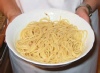
Spaghetti Aio e Oio
Spaghetti with
Garlic and Olive oil
Spaghetti with
Garlic and Olive oil
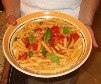
Penne
all’Arrabbiata
Penne with Tomatoes
And Red Pepper
all’Arrabbiata
Penne with Tomatoes
And Red Pepper
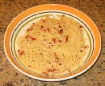
Pasta alla Gricia
Pasta with Bacon and
Pecorino Romano
Cheese
Pasta with Bacon and
Pecorino Romano
Cheese
Spaghetti alla
Amatriciana
Spaghetti with
Tomato and Bacon
Amatriciana
Spaghetti with
Tomato and Bacon
Spaghetti alla
Carbonara
Spaghetti with
Egg and Bacon
Carbonara
Spaghetti with
Egg and Bacon
Fettuccine alla Papalina
Fettuccine with Prosciutto and Bacon
Fettuccine with Prosciutto and Bacon

Fettuccine all’ Alfredo
Pasta Alfredo
Pasta Alfredo

Alfredo, and who on earth was he?