













wpb0336f6b_1b.jpg
wp38934e9b.gif
wp5533b116.gif
wp90fb5200_1b.jpg
Shopping
Mall
wp4c3d598c_1b.jpg
wp457a6db7_1b.jpg
wp5533b116.gif
wpb2373436_1b.jpg
wpaf6a6d4a_1b.jpg
wpc6f58a16_1b.jpg
wp5533b116.gif
wpf7ade5a1_1b.jpg
wpce531f93_1b.jpg
wpbacc69a3_1b.jpg
wp42453e21_1b.jpg
wp9facc36d_1b.jpg
Article
Index
Open
Kitchen
Recipe
Collection
Picture
Galleries
Guest
Cooks
wpc1089b10_1b.jpg
wp5533b116.gif
wp5533b116.gif
wp5533b116.gif
wp5533b116.gif
wp5533b116.gif
wpdeb351f4_1b.jpg
Read our DISCLAIMER and PRIVACY POLICY before using my site.
Home    Open Kitchen    Shopping    Resources    Contact us    Site Map
Copyright © 2003, 2004, 2005 Anna Maria Volpi - All Rights reserved.
Cooking Mushrooms

By: Joseph George (Bio)

The Fungus Among Us
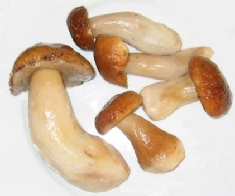
Though most often thought of as a vegetable, mushrooms are actually a form of fungus-they have no seeds, stems or flowers, and reproduce through spores that are transported through the air. They grow on logs in the forest, they grow in caves and they grow in your back yard or in city lots-mushrooms are known to grow in very diverse and adverse conditions. The only true safe mushrooms to eat, of course, unless you are trained in mycology, are the varieties purchased from a grocer or other reputable purveyor.

It's interesting to note that a mere decade ago the only fresh mushrooms available at local supermarkets were white domestic, or possibly the brown variety. Presently, there is usually no less that five varieties of fresh and dried exotic mushrooms on display at local stores. The ubiquitous portabella accounts for almost 10% of all mushrooms consumed in this country, this is an astounding fact seeing as they were first introduced and marketed as recently as the mid-eighties. Though portabella (also portobello) is an Italian sounding name, they're actually an American merchandizing invention, and are nothing more than an overgrown cremini, or common brown mushroom. As recent as 15 years ago, when cremini mushrooms grew too large they were either sold for processing or discarded and considered unsellable. It was a cunning businessperson who first gave portabella their interesting name and marketed them to America. I recently saw another marketing ploy for these mushrooms, they were medium sized, about twice the size of a cremini and half the size of a portabella, and labeled as "baby bellas."

Though the terms exotic and wild are often used interchangeably to describe various types of the fungus, wild mushrooms, technically speaking, should have been picked just as the name suggests: in the wild. Exotic mushrooms, on the other hand, can refer to any cultivated mushroom that is unfamiliar, or not native, to a particular region.
As with any versatile ingredient, mushrooms can be adapted to almost any cooking method. Sautéing and stewing are two of the more popular techniques to cook mushrooms, but with the advent of the portabella, mushrooms are now also being grilled, roast and barbequed. The hearty texture and flavor of these sometimes enormous mushrooms is often compared to meat; grilled portabella mushrooms can be a satisfying alternative for the carnivore and vegetarian alike.

Included in a recipe as an ingredient, the options for mushrooms are almost limitless. Two of the more common preparations are stuffing and soup, but they can also be included in everything from breads and pasta dough, to rice and egg dishes, and even tea or an ancient recipe for mushroom ketchup. Interestingly, mushroom ketchup was one of the original ketchups, it was based on a recipe that British sailors tried to emulate when they returned from the Far East. It wasn't until the tomato made its first appearance in Britain in the 18th century that it was used to make ketchup.

Mushrooms can also be easily dehydrated as a form of preservation, or they can be purchased in this state. Most mushrooms are made up of more than 80% water, and when dehydrated the only thing that has left them is this liquid; their flavors, in turn, become extremely concentrated. With the liquid loss of these fungi also comes weight loss, thus dried mushrooms are usually more pricey than in the fresh state. To dry mushrooms is simple, it can be accomplished using an ordinary food dehydrator, or simply by placing them on a wire rack in a well-ventilated area for a few days. Once dried, they will keep at room temperature for months.
To reconstitute mushrooms merely soak them in warm water for 15-20 minutes. Or if you're planning on utilizing them in a soup or sauce, soak the dried mushrooms in a small amount of the stock or broth that is to be used in the finished dish. By doing this any flavor that may leach into the soaking liquid will end up in the dish for an added flavor boost. Another option for dried mushrooms is to grind them to a powder while still dry, they can then be sprinkled on meat or fish just before sautéing, or stirred directly into soups and stews for added natural flavor.

When purchasing fresh mushrooms look for caps that are firm and smooth, they should be dry, but not dried out. At home they should be stored in the refrigerator. If they come packed in plastic, remove them from the package and store them in a paper bag so they can breath. Clean the mushrooms just prior to their use. If there are visible particles on the mushrooms, simply wipe them of with a damp towel, or rinse them quickly under cold running water and pat them dry. Never let mushrooms soak in water, as they tend to absorb excess moisture.

Once, while talking with an acquaintance in the early morning hours at an Allen Street bar, he told me that he truly believed that he was Rambo. He also told me that he preferred to enter his apartment through his window, rather than the door-just like Rambo. The even odder thing was that he lived on the third floor. It was just about that time that I had learned that he had ingested psilocybin mushrooms just a few hours before. Interestingly, the Ancient Egyptians believed mushrooms to be a gift of the Gods, and that they were sent to earth riding on the bolts of lightning. They also considered them to be magic, and that eating them regularly would make one immortal. Obviously, this acquaintance of mine had gotten a hold of some of these ancient mushrooms.


Joseph George
Visit Joseph 's website: http://members.localnet.com/%7Ejgeorge/


Joe is a chef, culinary educator and writer- is a graduate of The Culinary Institute Of America, and The School For American Chefs. He has also studied at The New School For Social Research in New York City and Le Cordon Bleu, in both Ottawa and Paris. He is the past co-owner of the acclaimed Café Cosmos, in Buffalo, New York and has been chef at numerous Buffalo area restaurants. Besides maintaining his own web site (Joe's Cyber-Kitchen) his work has appeared in both national and local publications, including Chef Magazine, Artvoice, Sally's Place, One4.com, Fillet and The National Culinary Review.

He is the author of a self-published book, Basic Elements: A Recipe Book Of Soup And Bread, and also worked as recipe tester for the Northeast Organic Farming Association Cookbook. Joe is currently teaching private cooking classes, and is a part-time instructor at Erie Community College. He lives in Buffalo with his wife Carrie Marcotte and their son Isaac George

Visit Cheftalk.com a food lover’s link to professional chefs
wp6e838152_1b.jpg
Mushrooms are a unique and peculiar food, and they're also somewhat of a paradox. Most are edible and delicious, but a few others are toxic and can make you ill or even cause your demise, and some are also hallucinogenic.

They're the type of food that people often obsess over-to some, they are one of the most delicious foods available, yet to others they are slightly scary and grotesque, not worthy of consumption.